
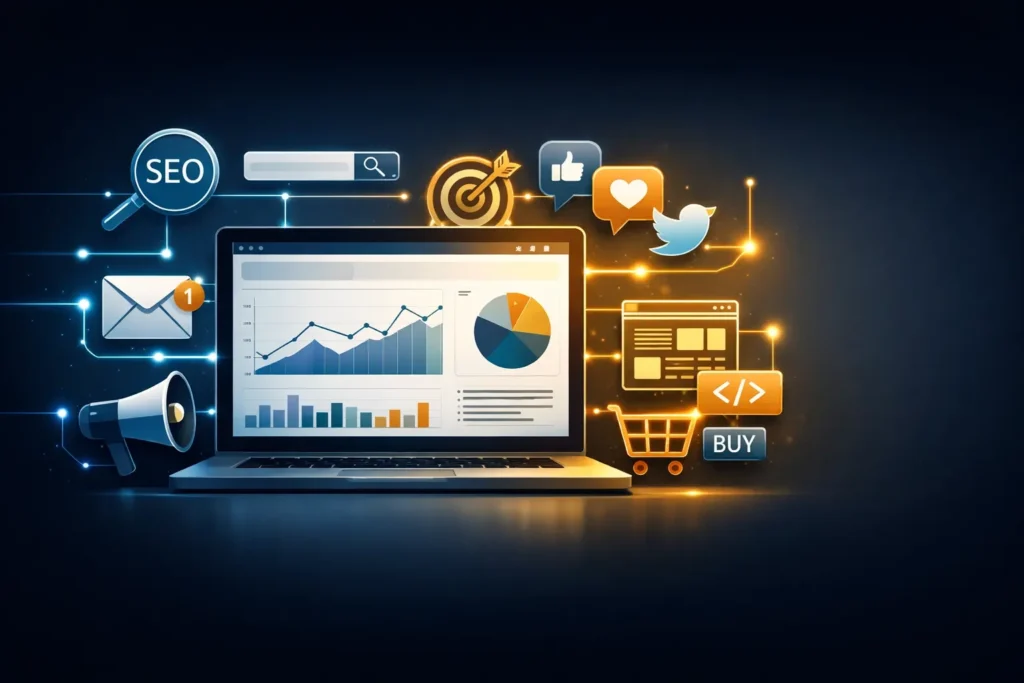
Digital marketing has become an essential part of modern business growth. As more people use the internet to search for products and services, companies must build a strong online presence to stay competitive. Digital marketing helps businesses reach potential customers through different online platforms such as search engines, social media, websites, and email.
Unlike traditional marketing methods like newspaper ads or billboards, digital marketing allows businesses to connect with their audience in a more targeted and measurable way. Companies can promote their products to people based on their interests, location, and online behavior. This targeted approach helps businesses attract the right audience and increase the chances of converting visitors into customers.
One of the most important components of digital marketing is search engine optimization (SEO). SEO helps websites appear higher in search engine results when people search for related services. For example, when someone searches for digital marketing services, websites with good SEO practices have a higher chance of appearing on the first page of search results. This increases website traffic and improves brand visibility.
Another important aspect of digital marketing is social media marketing. Platforms like Facebook, Instagram, LinkedIn, and YouTube allow businesses to communicate directly with their audience. Companies can share updates, promotions, and informative content that keeps customers engaged. Social media also allows businesses to run paid advertisements that target specific groups of people, making marketing campaigns more effective.
Content marketing also plays a major role in digital marketing strategies. Creating valuable and informative content helps businesses build trust with their audience. Blog posts, videos, infographics, and guides provide useful information to potential customers and encourage them to explore a company’s services further.
Email marketing is another effective digital marketing tool that helps businesses maintain communication with their customers. Through newsletters and promotional emails, businesses can share updates, offers, and helpful information that keeps customers connected with the brand.
Digital marketing also provides measurable results. Businesses can track how many people visit their website, click on advertisements, or engage with social media posts. These insights help businesses understand what strategies are working and where improvements are needed.
For small businesses and startups, digital marketing provides an opportunity to compete with larger companies. Even with a limited budget, businesses can promote their services online and reach a large audience. A well-planned digital marketing strategy can improve brand awareness, attract new customers, and increase overall business growth.
As the digital world continues to expand, businesses that invest in digital marketing will have a greater advantage in reaching modern consumers and building long-term success.
Key Components of Digital Marketing
Key Components of Digital Marketing
1. Search Engine Optimization (SEO)
SEO is the process of optimizing a website so that it appears higher in search engine results. By using the right keywords, improving website structure, and creating quality content, businesses can attract organic traffic from search engines.
2. Social Media Marketing
Social media marketing helps businesses connect with their audience through platforms such as Facebook, Instagram, LinkedIn, and YouTube. Regular posting, engaging visuals, and interactive content help brands build relationships with customers.
3. Content Marketing
Content marketing focuses on creating valuable content such as blog posts, articles, videos, and guides. High-quality content helps businesses educate their audience, improve website traffic, and build trust.
4. Email Marketing
Email marketing allows businesses to communicate directly with customers. Sending newsletters, promotional offers, and updates helps businesses maintain long-term relationships with their audience.
5. Pay-Per-Click Advertising (PPC)
PPC advertising allows businesses to run paid ads on search engines and social media platforms. Companies only pay when someone clicks on their advertisement, making it a cost-effective marketing strategy.
Benefits of Digital Marketing for Businesses
- Helps businesses reach a global audience
- Cost-effective compared to traditional marketing
- Allows targeted advertising to the right customers
- Improves brand awareness and online visibility
- Provides measurable and trackable results
- Helps businesses generate quality leads and sales
Conclusion
Digital marketing has transformed the way businesses promote their products and services. With the right strategy, businesses can reach their target audience, build strong customer relationships, and achieve long-term growth. Investing in digital marketing is no longer optional but essential for businesses that want to succeed in today’s competitive online environment.